
Archive Sticker
- Project
- African Tech Ecosystem Research
- Phase
- Field Research & Partner Interviews
- Years
- 2018–2020
- Status
- Archived, Recontextualized
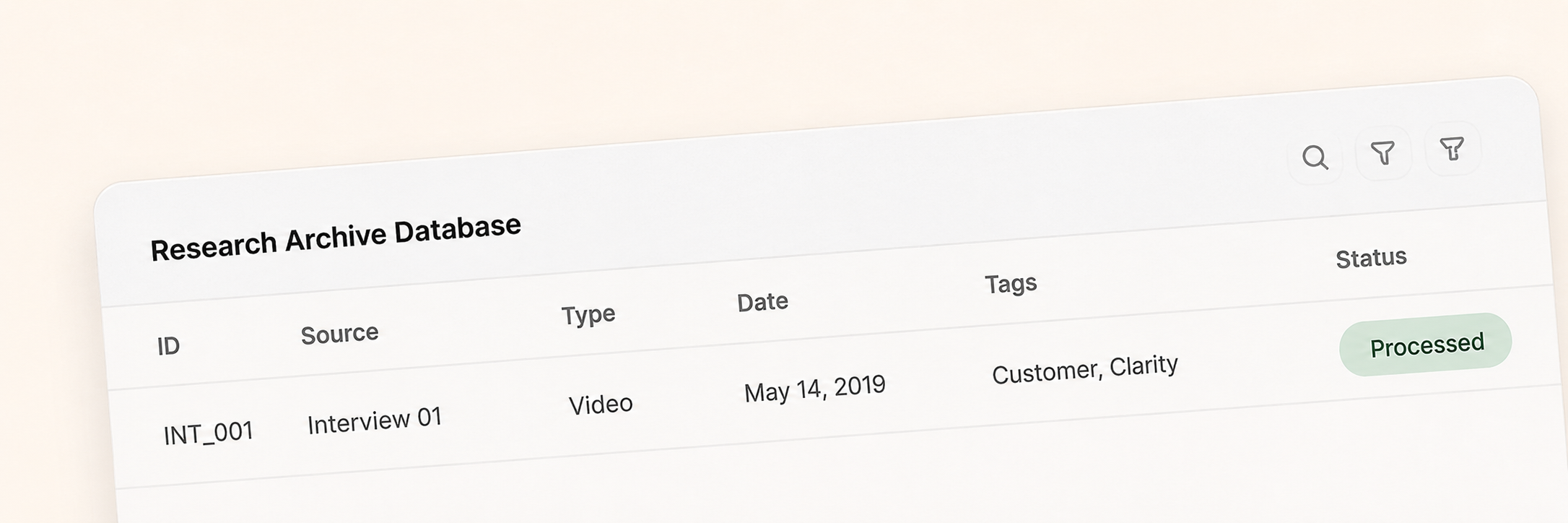
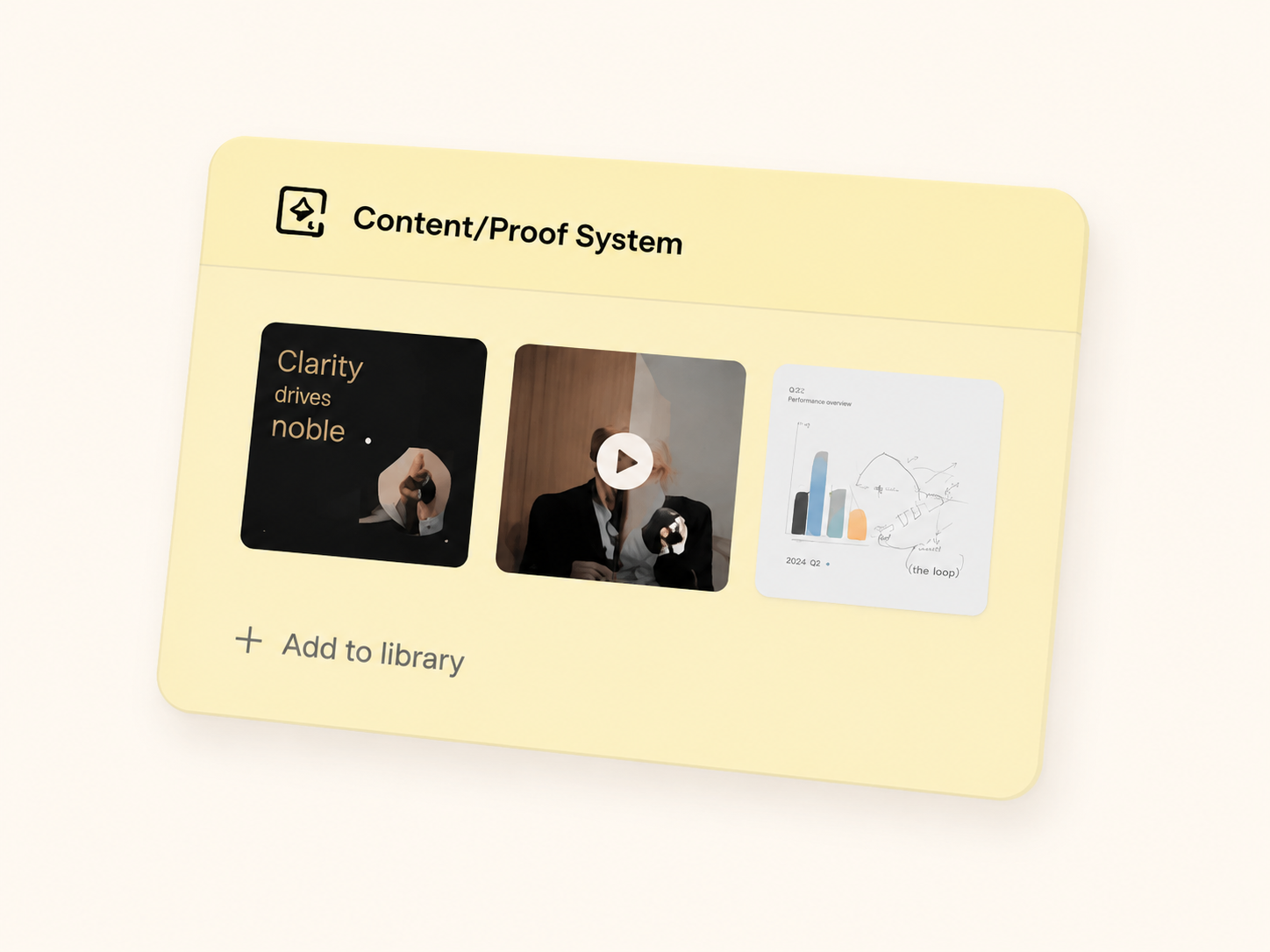
I used AI to help turn a messy research archive into a database, quote bank, claims register, and content/proof system. The lesson is simple: your existing data may already contain the next move.
Scroll to explore
The archive came from a major African tech ecosystem research project. The hard part had already happened: the conversations, notes, context, and raw material existed. The problem was that the material was scattered, sensitive in places, and too hard to reuse quickly.
Stakeholder interviews across the broader research effort.
Clean external transcript files in the verified corpus.
Words of transcript material processed into evidence infrastructure.
Validated people rows after first-pass duplicate consolidation.
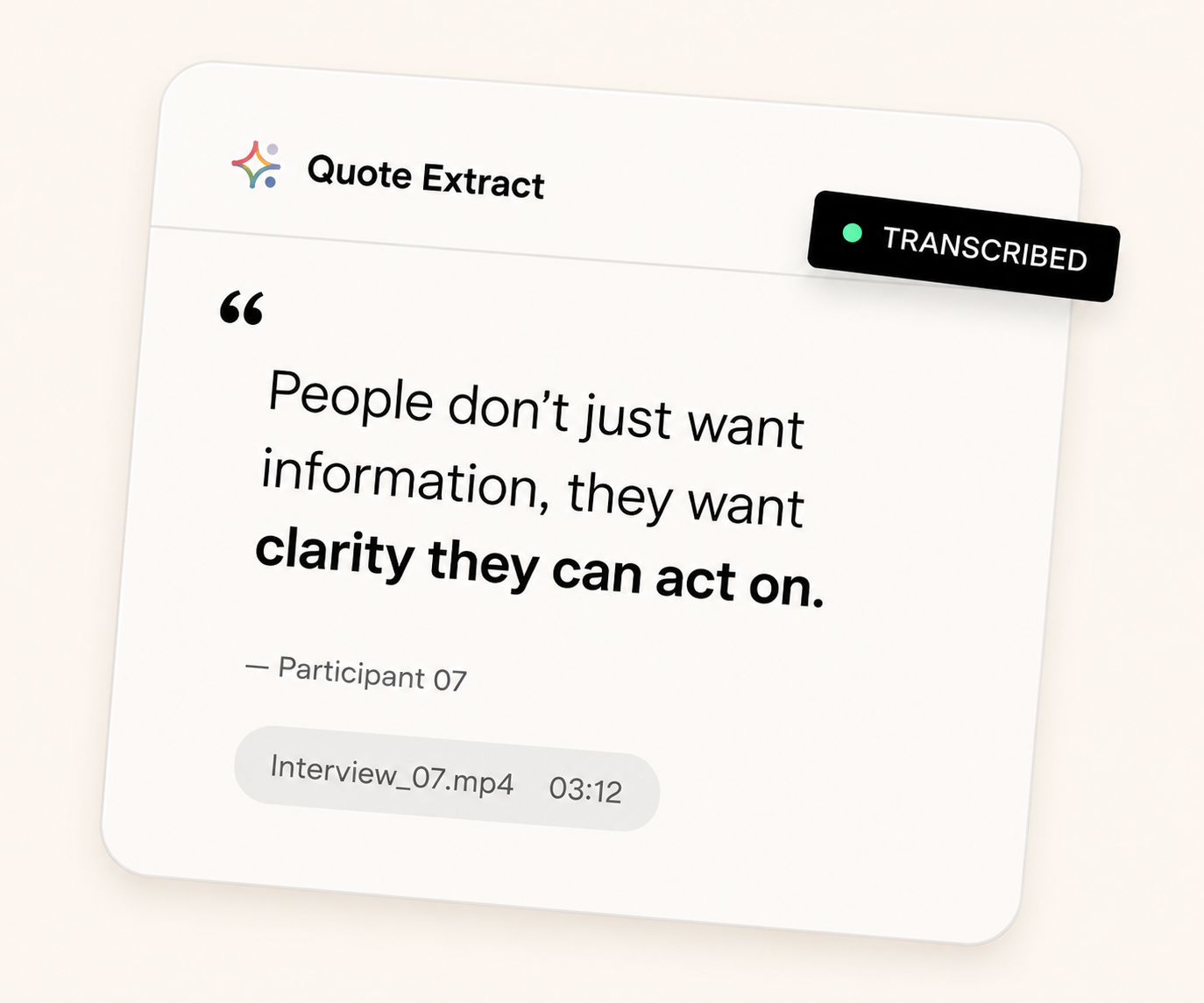
Curated quote candidates, labeled before any public use.
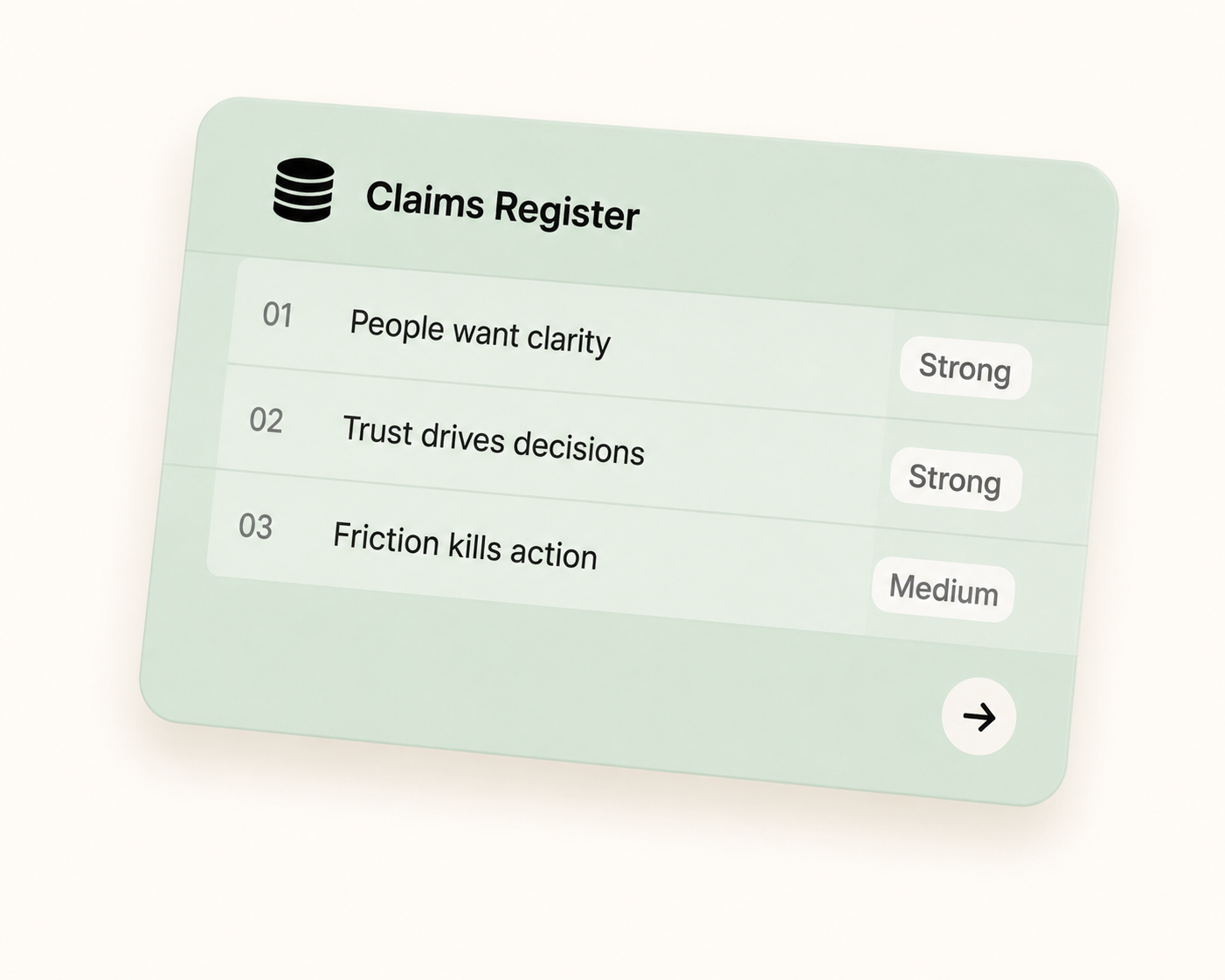
Structured claims separated by evidence, interpretation, and confidence.
Public-safe note: this page uses aggregate stats, paraphrases, and broad themes. It does not publish raw internal employee quotes, sensitive shutdown claims, or unverified named quotes.
The default AI move is to upload a folder and ask for a summary. That can be useful, but it usually gives you one polished blob of text. I wanted something that could keep producing decisions.
Useful for getting oriented.
Weak for repeated use.
Useful because the archive becomes an operating system for insight.
All mapped
People don’t just want information, they want clarity they can act on.
Participant 07Each stage made the next stage easier. That is the actual AI unlock: not magic output, but better structure around messy inputs.
Section 7 / 8
A structured evidence layer that can be queried, exported, and revisited instead of rediscovered.
A clearer view of how founders, funders, operators, and institutions experience the ecosystem differently.
Evidence candidates labeled for sensitivity, confidence, and future use before anything becomes public.
A guardrail that keeps evidence, interpretation, and hypotheses from getting blended into overconfident AI output.
Public-safe angles for Unlocked, founder support, AI leverage, and Right-It thinking.
Clear paths from research infrastructure into diagnostics, audits, snapshots, teaching demos, and B2B work.
These are public-safe examples of what the system produced: insights, anonymized quote patterns, claims, content angles, and offer opportunities. The sensitive material stays private. The structure is the point.
Archive knowledge
24,317 insights
A research pattern became a public content angle: the danger is not slow execution anymore. The danger is beautiful execution pointed at a weak assumption.
Voice notes, comments, DMs, and old drafts can be structured into content pillars, objections, lesson modules, examples, and a better first offer.
Privacy rule: these cards are paraphrased or aggregated. No raw internal employee quotes, sensitive claims, or named external quotes are exposed here.
Learn moreYour version might be customer calls, founder applications, old consulting work, internal docs, or audience notes. The question is not whether AI can summarize them. The question is what system would turn them into decisions.
Customer calls
Turn calls into objections, buying triggers, pain patterns, positioning, and test ideas.
Internal docs
Turn SOPs and handoffs into workflow maps, decision rules, and automation opportunities.
Old client work
Turn reports and workshop notes into reusable IP, lead magnets, diagnostics, and offers.
Interviews
Turn transcripts into a quote bank, claims register, synthesis, and a public-safe report.
Founder data
Turn applications and updates into support gaps, founder journeys, and operating-system recommendations.
Notes and comments
Turn drafts, DMs, and audience feedback into content pillars, course modules, examples, and offer ideas.
If this made you think of your own messy folder, start with the
research archive question.
If you already know what you want to unpack, book the audit.
Interview transcripts, old reports, notes, and half-remembered files.
Good signal existed, but it was hard to retrieve, compare, or use safely.
A one-time summary would create a neat document, then die in the chat.

Structured corpus inventory with people, files, themes, and exports.
Quote bank, claims register, privacy labels, and confidence notes.
Content lanes, offer opportunities, teaching demos, and decision paths.
Corpus Inventory
Total items 1,482 · Sources 73
14 items